
Wildfire Smoke Season 2026: Advanced HVAC Strategies to Protect Indoor Air This Summer
When smoky skies settle over Southern California, closing the windows is only the first step. Fine particles from wildfire smoke can still find their way indoors through small gaps, duct leakage, ventilation pathways, and everyday door openings. For homeowners in Anaheim, Orange County, and the surrounding areas, protecting indoor air during wildfire smoke season requires a stronger plan. Your HVAC system, filtration setup, and indoor air quality equipment can all play a role in reducing smoke-related particles inside the home.
How Does Wildfire Smoke Get Inside Your Home?
Wildfire smoke contains fine particle pollution that can move through the air and enter homes in ways that are not always obvious. Even when windows and doors are closed, smoke particles may come in through gaps around frames, attics, crawl spaces, attached garages, leaky ductwork, and ventilation paths.
AirNow’s Fire and Smoke Map tracks PM2.5 from wildfire smoke and other sources, which is helpful because these tiny particles are one of the biggest indoor air concerns during smoke events. Once particles enter the home, they can circulate through living spaces and affect comfort, odor, and indoor air quality.
Why Should Your HVAC System Be Checked Before Smoke Season?
A well-maintained HVAC system can better support airflow and filtration during periods of poor outdoor air quality. Before smoke season intensifies, a professional can inspect filter condition, blower performance, airflow, duct concerns, and overall system operation.
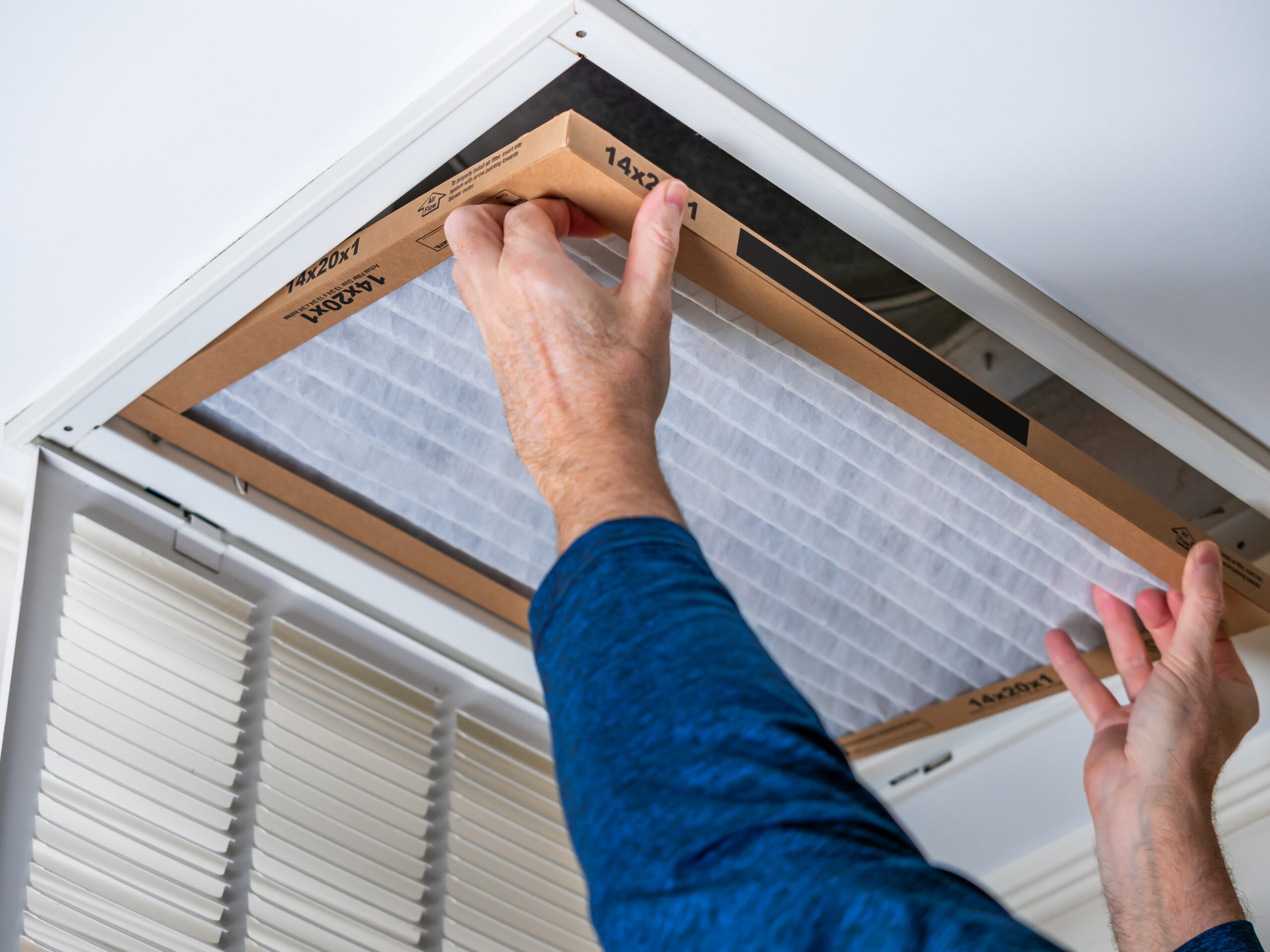
This matters because filtration is not just about using the strongest filter available. If a filter is too restrictive for your system, it can reduce airflow and affect cooling performance. A technician can help determine which filtration options are compatible with your equipment.
Scheduling AC maintenance in Anaheim before summer can also help identify issues that may become more noticeable when the system is running longer during heat and smoke events.
What Filtration Upgrades Help During Wildfire Smoke Events?
Standard HVAC filters are often designed to protect equipment first, not necessarily to handle heavy smoke particles. During wildfire smoke events, homeowners may benefit from higher-efficiency filtration or dedicated indoor air quality equipment, depending on the home and system.
The EPA recommends preparing before smoke events by considering a portable air cleaner or high-efficiency HVAC system filter. For whole-home support, advanced options such as a HEPA Air Cleaner or Bioguard Powered Filter may help improve filtration beyond a basic system filter.
The right approach depends on your HVAC design, airflow requirements, home layout, and indoor air quality goals. Exploring indoor air quality solutions with a professional can help you choose equipment that supports cleaner air without overloading your cooling system.
How Can You Use Recirculation and Ventilation Settings Wisely?
During wildfire smoke events, the goal is often to reduce the amount of smoky outdoor air entering the home. Keeping windows and doors closed is important, but some homes also have fresh-air dampers, ventilation systems, or settings that may bring outdoor air indoors.
Those features are useful in normal conditions, but they may need special attention when outdoor air quality is poor. Because ventilation setups vary, homeowners should have a professional review how their system brings in or recirculates air. South Coast AQMD advises limiting exposure when smoke or ash is present, so system settings should support that goal whenever possible.
What Are Advanced HVAC Strategies for Cleaner Indoor Air?
Protecting indoor air during wildfire smoke season is not about one product or one habit. It works best as a layered strategy that combines maintenance, filtration, monitoring, and professional guidance.
- Schedule pre-season system maintenance before smoke and heat peak.
- Confirm that higher-efficiency filters are compatible with your system.
- Have duct leakage concerns evaluated if smoke odors enter repeatedly.
- Consider dedicated IAQ equipment, such as a HEPA Air Cleaner or Bioguard Powered Filter.
- Monitor local air quality before opening windows or changing ventilation habits.
- Replace or service filtration components according to professional recommendations.
- Call for service if airflow weakens after a filter or IAQ upgrade.
The most important point is balance. Better filtration can help, but too much restriction can reduce cooling performance if the system is not designed for it.
When Should You Call for Help During Smoke Season?
You should call for help if smoke odors linger indoors, dust or ash appears near vents, airflow feels weaker than usual, or your system runs longer without improving comfort. Filters that load quickly, rooms that feel stuffy, or increased indoor allergy and respiratory irritation can also point to an indoor air quality concern.
These symptoms do not always have one cause, but they are worth addressing quickly during an active smoke period. A professional can review your HVAC system, filtration, ductwork, and IAQ options.
Prepare Your Home for Wildfire Smoke Season
Wildfire smoke season can be stressful, but the right HVAC strategy can help you feel more prepared before smoky air reaches your neighborhood. For homeowners in Anaheim, Orange County, and the surrounding areas, preparation starts with a system that is maintained, properly filtered, and supported by the right indoor air quality solutions.
At Alps Heating & Air Conditioning, Inc., we help homeowners improve comfort and indoor air quality with professional HVAC maintenance, HEPA Air Cleaner options, Bioguard Powered Filter solutions, and personalized recommendations for the home.
To strengthen your indoor air plan before wildfire smoke season, contact us today.