

AC Repair Anaheim CA Homeowner Guide: Why Your System Runs but Won’t Cool
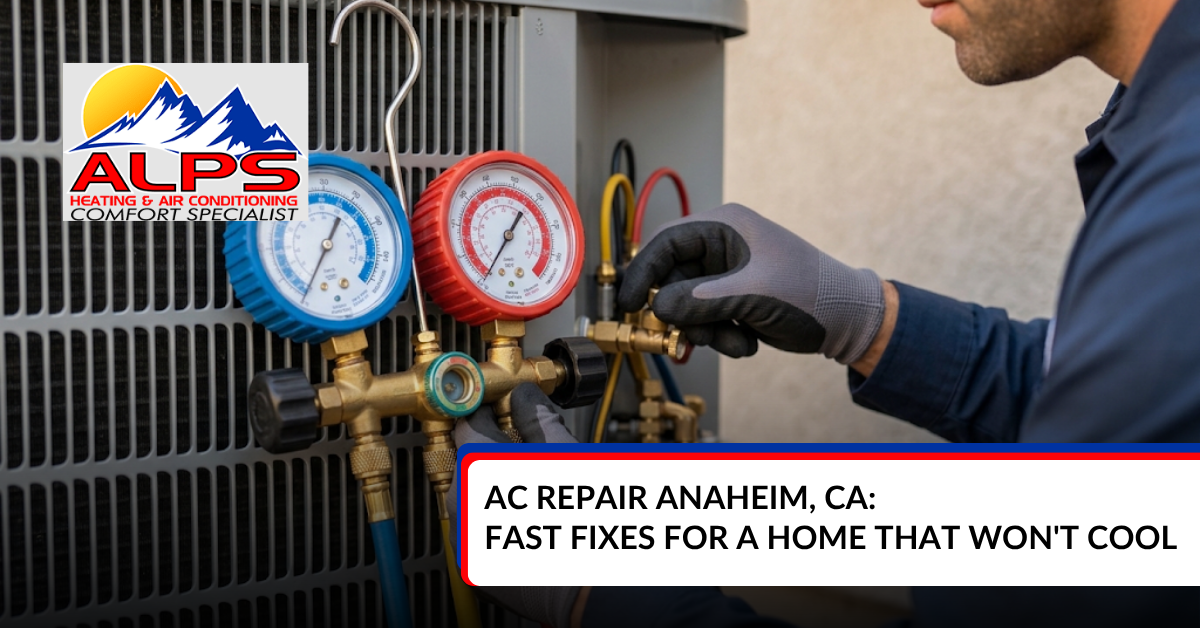
An AC that runs without cooling usually has either restricted airflow, reduced cooling capacity, leaking ductwork, or too much heat entering the home. Start by checking the thermostat, filter, supply vents, return grilles, and outdoor unit. Weak airflow, ice, repeated breaker trips, refrigerant problems, or an outdoor unit that will not operate require professional diagnosis. If basic checks do not restore cooling, schedule AC repair in Anaheim before allowing the system to run continuously.
Your thermostat says 74°F. The air conditioner has been running for what feels like hours. You place your hand over a vent and feel air moving, yet the temperature inside your Anaheim home barely changes.
That does not automatically mean you need a new air conditioner. When homeowners call for AC repair Anaheim CA, the real cause may be inside the AC itself, but it can also be restricted airflow, leaking attic ductwork, excessive attic heat, a dirty filter, an iced evaporator coil, low refrigerant, or an electrical component that is no longer operating correctly.
Anaheim’s summer conditions make the distinction important. NOAA’s 1991 to 2020 climate normals show an average August daily high of 88.8°F, with Anaheim averaging about 11 days at or above 90°F during August.
This guide shows you how to separate an AC problem from a duct, attic, or airflow problem before a small comfort issue becomes a larger repair.
What Does AC Running but Not Cooling Actually Mean?
An air conditioner does more than blow air. It removes heat from indoor air at the evaporator coil, transfers that heat through refrigerant, and releases it outdoors through the condenser coil.
That means a system can sound like it is running while one part of the cooling process is failing.
The AC itself may be losing cooling capacity
Low refrigerant from a leak, a dirty coil, a weak compressor, a failed capacitor, or a condenser fan problem can reduce the amount of heat the system removes.
Refrigerant is part of a sealed circuit. It is not something an air conditioner should routinely “use up.” EPA rules also require technicians who service regulated stationary air-conditioning refrigerants to hold appropriate Section 608 certification.
Airflow may be the real problem
A clogged filter, dirty evaporator coil, failing blower motor, blocked return grille, crushed flexible duct, or closed register can reduce airflow enough that your home stays hot even while the equipment operates.
The house may be gaining heat faster than the AC removes it
Poor attic insulation, duct leakage, afternoon solar heat, additions, or an improperly sized system can create a whole-home performance problem.
HVAC Advice: If the AC has always struggled on hot afternoons, investigate sizing, ducts, insulation, and heat gain instead of assuming a single component suddenly failed.
That broader view becomes especially important when you start noticing the warning signs below.
Warning Signs You Should Never Ignore
The way your system behaves can help narrow down whether you need air conditioning repair in Anaheim or an airflow and duct inspection.
Watch for these symptoms:
- Warm air from the vents: The indoor fan may be operating while the outdoor cooling section is not.
- Weak airflow from AC vents: A dirty filter, blower problem, blocked return, dirty coil, or restricted duct may be limiting air volume.
- AC running all day but not cooling: The equipment may have lost capacity, the home may have excessive heat gain, or conditioned air may be escaping through ducts.
- Ice on refrigerant lines or the indoor coil: Restricted airflow or a refrigeration problem can cause the evaporator temperature to fall below freezing.
- AC keeps shutting off: Short cycling can be related to controls, electrical components, overheating, airflow restrictions, or system sizing.
- Air conditioner leaking water: A blocked condensate drain, frozen coil, damaged drain pan, or drainage problem may be involved.
- AC breaker keeps tripping: Stop repeatedly resetting it. A breaker that trips again can indicate an electrical or equipment fault that requires diagnosis.
A commonly overlooked clue is uneven cooling. If one side of the house feels comfortable while bedrooms at the end of the duct system stay hot, the equipment may be producing cold air correctly. The problem may be distribution.
Warning: Do not keep resetting a breaker that repeatedly trips, and do not operate an AC with visible ice for hours hoping it will correct itself.
Recognizing these signs early can prevent unnecessary strain and help keep repair options open.
What Happens If You Delay AC Repair in Anaheim, CA?
An AC that runs continuously while failing to cool can create problems beyond discomfort.
First, extended runtimes increase electricity consumption. If the problem is restricted airflow, the blower and compressor may work under conditions they were not designed to handle continuously.
Second, a frozen evaporator coil can eventually thaw and release a significant amount of water. If the drain system cannot handle it, you may see water around the air handler, ceiling staining, or moisture near surrounding materials.
Third, duct problems waste cooling you already paid to produce.
That matters in Orange County homes where ducts commonly pass through hot attic spaces. A supply leak can dump cooled air into the attic. A return leak can pull hot attic air into the system before it reaches the evaporator coil.
The next question is which checks are reasonable for you to perform safely.
DIY Checks vs. Calling a Licensed HVAC Contractor
You can rule out several basic problems without opening the air conditioner.
What You Can Handle
- Confirm thermostat settings. Select COOL and set the fan to AUTO.
- Inspect the air filter. Replace it if it is visibly dirty and use the size specified for your system.
- Check vents and returns. Make sure furniture, rugs, boxes, and closed registers are not restricting airflow.
- Look at the outdoor unit. Remove obvious loose debris around it without opening panels.
- Look for visible ice or water. If the coil or refrigerant line is frozen, turn cooling off and arrange diagnosis if the condition returns.
When You Must Call a Pro
Call a licensed HVAC contractor for refrigerant work, capacitor replacement, compressor problems, internal electrical diagnosis, blower repairs, repeated breaker trips, or invasive coil service.
California’s CSLB states that contractors must hold a current license when work requires a building permit, uses employee labor, or totals $1,000 or more in labor and materials. The C-20 classification covers warm-air heating, ventilation, air conditioning, related ducts, controls, and filters.
Safety Notice: HVAC equipment contains high-voltage electrical components and may contain pressurized refrigerant. Do not open electrical compartments, bypass safety controls, handle capacitors, or attempt refrigerant repairs unless you are properly qualified. If a breaker repeatedly trips, stop operating the equipment and arrange professional service.
If the simple checks do not reveal the problem, professional testing can separate guesswork from evidence.
Need Cooling Help Now?
If your Anaheim AC is running but the house continues getting warmer, Alps Heating & Air Conditioning currently advertises emergency air conditioning repair. Call (714) 633-8892 to ask about the earliest available service appointment. Same-day availability should always be confirmed when scheduling.
How Professional AC Diagnosis and Repair Works
A good AC repair visit should identify why cooling capacity is missing before anyone starts replacing parts.
Step 1: Confirm the Complaint, About 5 to 10 Minutes
The technician checks thermostat operation, indoor temperature, operating history, unusual noises, water, odors, and whether the problem affects the entire house or specific rooms.
Step 2: Inspect Airflow, About 10 to 20 Minutes
The filter, return path, blower, evaporator coil, registers, and accessible ductwork are examined. Technicians may measure temperature and airflow to determine whether the equipment is moving enough conditioned air.
Step 3: Test the Cooling System, About 15 to 30 Minutes
The technician evaluates the indoor and outdoor equipment, electrical components, condenser performance, refrigerant circuit, and operating temperatures.
Step 4: Separate Equipment Problems From House Problems
If the AC produces proper cooling but rooms remain hot, the investigation shifts toward duct leakage, insulation, attic heat, system sizing, and airflow balance.
Step 5: Explain Repair Options
You should receive a clear description of what failed, what caused it, recommended work, expected cost, and any relevant warranty information before authorizing repairs.
Alps states that its current technicians are NATE-certified, service all major makes and models, and follow a customer-education approach rather than high-pressure selling.
That diagnostic process also gives you the information needed to judge whether the quoted repair price is reasonable.
AC Repair Anaheim CA Cost Guide for 2026
There is no honest flat price for every AC not cooling call. A dirty component, failed capacitor, refrigerant leak, blower problem, duct failure, and damaged compressor require very different repairs.
Your Anaheim price can also change because of emergency scheduling, equipment age, refrigerant type, parts availability, attic access, duct condition, and required code work.
A legitimate estimate should clearly identify the problem, parts, labor, warranty terms, and additional work requiring authorization.
Red flag: Be cautious with unusually low quotes that do not identify the diagnosis or with contractors unwilling to provide their license information.
For major repairs or replacement, ask about current financing and rebates rather than assuming an advertised promotion applies to your system.
How to Choose the Right AC Repair Company in Anaheim
Searching for AC repair near me Anaheim can produce dozens of options. The important question is which contractor can prove the diagnosis and stand behind the work.
Verify the California License
Use the California Contractors State License Board’s license-check system. CSLB lets consumers search by license number and review license information before hiring.
Alps business materials identify California contractor license CSLB #667953. Homeowners should verify the current license record directly through CSLB before signing a major home-improvement contract.
Check Technical Qualifications
Ask whether technicians hold NATE certification, EPA Section 608 certification where refrigerant work is involved, and equipment-specific factory training.
If a contractor claims a manufacturer dealer designation, verify that designation before relying on it. Alps’ current website identifies the company as a Lennox Specialist and says the team services all makes and models.
Ask Better Questions
Ask:
- What measurements confirmed the diagnosis?
- Is the problem equipment, airflow, ductwork, or home heat gain?
- Are parts and labor warranties written into the estimate?
- Does this work require a permit or 2026 Energy Code verification?
- What happens if the recommended repair does not solve the comfort issue?
For reviews, look beyond the average rating. Read recent Google, Yelp, and neighborhood-platform reviews for repeated comments about diagnosis quality, cleanliness, communication, and whether the final price matched expectations.
Local expertise matters even more when California permit and efficiency rules enter the picture.
Summer Heat, Attics, Airflow, and Preventive Maintenance
Southern California cooling problems often become visible during sustained hot weather because the AC, attic, ducts, insulation, windows, and air leakage all interact.
If attic insulation is thin or ducts are damaged, your cooling system has to overcome more heat before the living space becomes comfortable.
Summer Cooling Checklist
- Check the filter regularly during heavy AC use.
- Keep return grilles and supply registers unobstructed.
- Schedule maintenance before peak cooling demand.
- Inspect accessible ductwork for disconnected or crushed sections.
- Keep the outdoor condenser clear of loose leaves and debris.
- Have persistent hot rooms evaluated instead of closing more vents.
Preventive service will not eliminate every breakdown, but it can expose dirty coils, worn electrical components, drainage issues, and airflow restrictions before the hottest part of the season.
That is especially valuable in Anaheim because local efficiency and permit requirements changed for 2026.
Anaheim and Orange County Factors That Affect Cooling
Anaheim homeowners have several local considerations that do not apply equally across every Southern California city.
California’s 2025 Energy Code Is Now in Effect
California’s 2025 Building Energy Efficiency Standards apply to permit applications submitted on or after January 1, 2026. The California Energy Commission says HVAC alteration requirements can include duct sealing, refrigerant-charge verification, airflow requirements, and field verification depending on the project.
Anaheim’s official HVAC permit page lists mechanical and electrical permit materials for AC projects.
Anaheim Public Utilities Offers Efficiency Incentives
Anaheim Public Utilities’ Home Incentives Program application, updated in April 2026, lists qualifying measures including central AC, heat pumps, heat-pump mini-splits, duct repair or replacement, smart thermostats, attic measures, and other efficiency upgrades. Eligibility requirements apply, so verify incentives before purchasing equipment.
That means an older AC that is not cooling may lead to more than a simple repair discussion. Depending on system condition, duct leakage, insulation, and operating cost, homeowners may have repair, efficiency-upgrade, or replacement options.
Alps serves Anaheim along with nearby Villa Park, Brea, Fullerton, Placentia, Yorba Linda, Irvine, Fountain Valley, and Tustin. Utility programs and permit requirements can differ outside Anaheim, so verify the rules for the property’s jurisdiction.
Homeowners Also Ask About AC Cooling Problems
Why is my AC running but not cooling the house?
The most common categories are restricted airflow, lost refrigeration capacity, outdoor-unit problems, duct leakage, or excessive heat entering the home. Check your thermostat, filter, vents, returns, and outdoor unit first. If airflow remains weak, ice appears, warm air continues, or the outdoor unit is not operating correctly, schedule professional diagnosis rather than replacing parts based on symptoms alone.
How do I know whether the AC or ductwork is causing the problem?
If air leaving the equipment is properly cooled but certain rooms remain hot or airflow varies dramatically by register, duct leakage, restrictions, balance, or insulation may be involved. ENERGY STAR notes that duct leakage can cause both higher bills and rooms that are difficult to cool. A technician can test the system instead of relying solely on vent temperature.
Why is my AC blowing warm air in Anaheim?
Check whether the thermostat is on COOL and the fan is on AUTO. If the indoor blower works but the outdoor condenser does not, an electrical or outdoor-unit problem may be involved. Dirty filters, frozen coils, refrigerant problems, and restricted airflow can produce similar symptoms. If warm air continues after the basic checks, arrange air conditioning repair in Anaheim.
Can I get same day AC repair in Anaheim?
Availability depends on technician schedules, demand, and the time of the request. Alps’ current AC repair page advertises emergency air conditioning repair, but homeowners should confirm same-day availability directly when booking rather than assuming a guaranteed arrival window.
Frequently Asked Questions
How much does AC repair cost in Anaheim in 2026?
Common repairs can vary from a relatively inexpensive drainage or electrical component repair to several thousand dollars for a major coil or compressor problem. Current industry benchmarks place many AC repairs between roughly $150 and $650, with complex repairs costing considerably more. Anaheim homeowners should request a diagnosis and written estimate because equipment type, access, refrigerant, parts, emergency scheduling, and warranty coverage all affect price.
How long does an AC repair take?
Straightforward electrical or drainage repairs may be completed during the initial service visit when the correct part is available. Refrigerant leaks, coil problems, uncommon components, extensive duct repairs, and complex electrical faults can take longer. A professional technician should first identify the failure and explain repair timing before work begins.
Should I repair or replace an AC that runs constantly?
Constant operation alone does not prove the system needs replacement. Start with airflow, ductwork, refrigerant performance, coils, controls, and home heat gain. Replacement becomes more reasonable when an older system requires a major repair, has repeated failures, no longer meets the home’s cooling load, or combines poor performance with high operating costs.
Do I need a licensed HVAC contractor in California?
California requires a contractor license when the project requires a building permit, uses workers, or reaches $1,000 or more in combined labor and materials. HVAC contractors commonly work under the C-20 classification. Verify a contractor through the Contractors State License Board before authorizing significant repair or replacement work.
Does Alps repair AC systems from brands other than Lennox?
Yes. Alps’ current website states that the company services all makes and models, even though it also identifies itself as a Lennox Specialist. If your system requires a specialized proprietary component, confirm part availability and warranty requirements when scheduling.
Ready to Find Out Why Your Anaheim Home Won’t Cool?
An air conditioner that runs all day without reaching the thermostat setting is telling you something is wrong. The fastest path to a real solution is determining whether the problem is the equipment, airflow, ductwork, attic, or the home’s overall cooling load.
For AC repair Anaheim CA, Alps Heating & Air Conditioning provides cooling repair for Anaheim and communities throughout Orange County. The company is family-owned, lists California contractor license CSLB #667953, currently states that its technicians are NATE-certified, and services all major makes and models.
Call Alps Heating & Air Conditioning at (714) 633-8892 torequest AC serviceand ask about current emergency availability.